


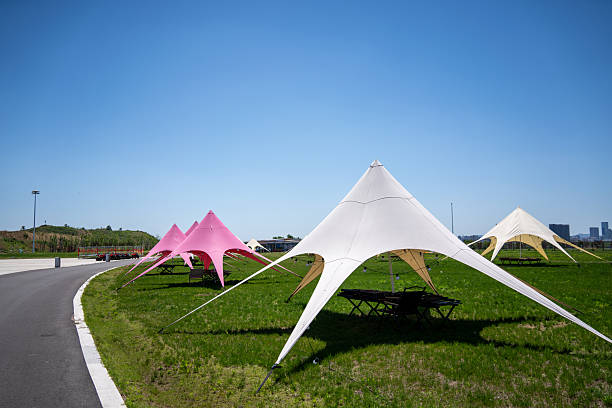
When planning an outdoor exhibition booth, choosing between a star tent and a pop-up folding tent can directly affect brand visibility, booth layout, and setup efficiency.
A star tent is designed to attract attention with its distinctive shape and large branding surface. A pop-up tent prioritizes fast setup, practical shelter, and rectangular floor space for displaying products and accommodating visitors.
Neither option is ideal for every event. The right choice depends on your exhibition goals, venue conditions, available staff, and booth layout requirements.
This guide compares star tents and pop-up tents to help event organizers, marketing teams, and exhibition buyers choose the right structure for their next outdoor event.
1. خيمة النجمة: Maximize Brand Visibility at Outdoor Events
A star tent features a distinctive multi-point canopy that creates a recognizable silhouette. Its unusual shape can help a booth stand out among conventional exhibition shelters, making it suitable for brand activations, outdoor promotions, المهرجانات, sporting events, and experiential marketing campaigns.
Key Advantages of Star Tents
Strong visual recognition
The star-shaped canopy creates a prominent visual feature in an open exhibition area. With custom-printed fabric, brands can display logos, colors, and campaign graphics across the canopy to attract attention from different viewing angles.
Distinctive event presence
A star tent can serve as a visual landmark, helping visitors identify a promotional area or branded activation. It is particularly useful when differentiation matters more than maximizing rectangular floor space.
Flexible branding opportunities
Depending on the design, the canopy can accommodate large-format graphics and customized brand colors. Buyers should confirm printable areas, artwork placement, and visibility from the intended approach directions before production.
Potential Limitations of Star Tents
Despite their visual appeal, star tents require careful planning.
- Anchoring requirements: Installation may require ground stakes on suitable soft ground or an engineered ballast system on paved surfaces.
- Usable interior space: Sloping canopy sections and support structures can limit the practical display area, depending on the model.
- Setup requirements: Some designs require multiple people and more assembly time than a conventional pop-up tent.
- Venue suitability: Available ground space, overhead clearance, التعرض للرياح, and event regulations must be considered before installation.
A star tent is a strong option when brand visibility and a distinctive booth appearance are the primary objectives.
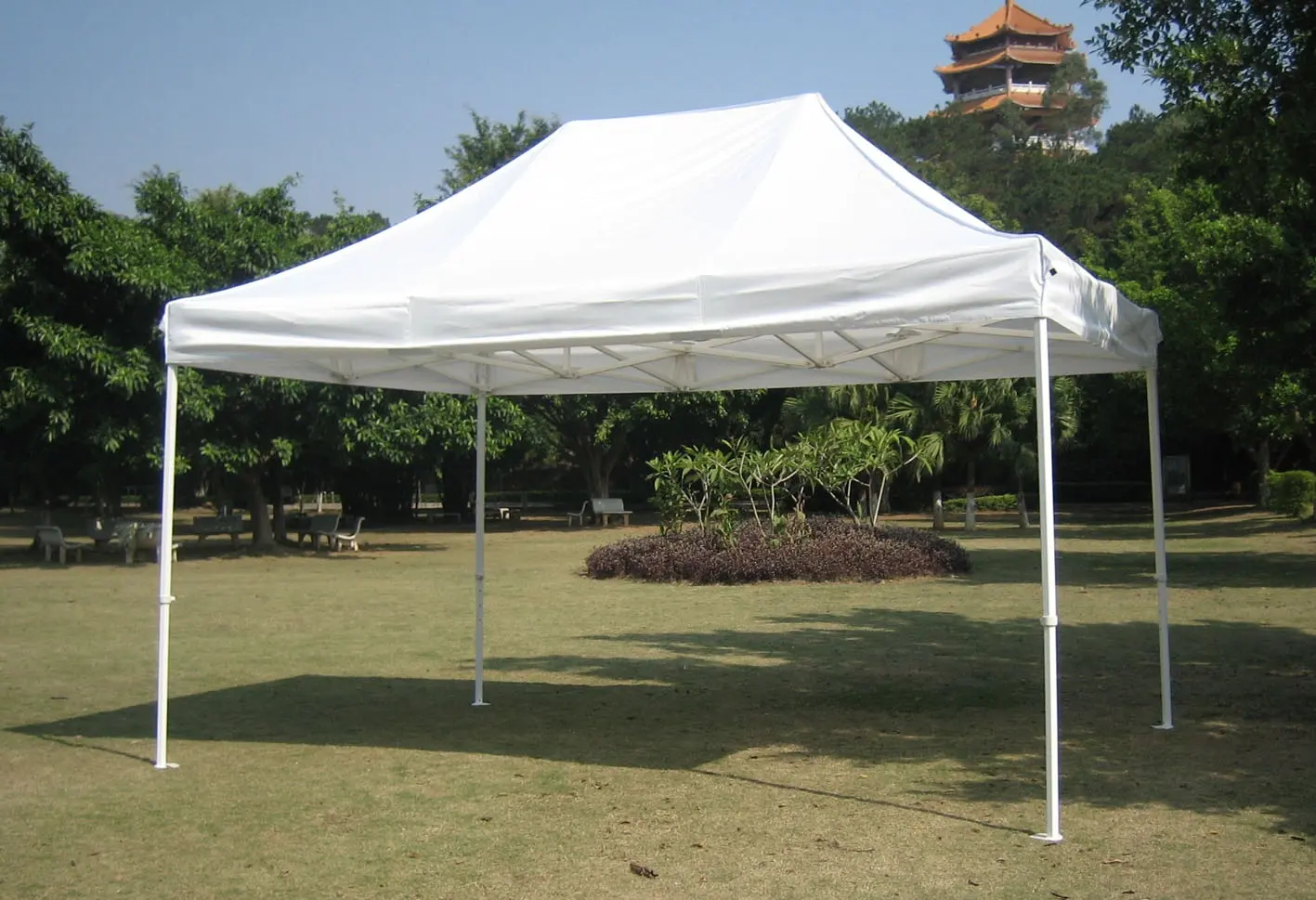
2. Pop-Up Folding Tent: Prioritize Practical Booth Space
A pop-up folding tent typically uses a collapsible frame and a canopy that opens into a square or rectangular shelter. Its straightforward structure makes it a popular choice for temporary exhibition booths, product demonstrations, market stalls, and outdoor sales activities.
Key Advantages of Pop-Up Tents
Fast and convenient setup
Many pop-up tents can be assembled quickly by a small team. The actual time depends on the frame design, tent size, anchoring method, and whether sidewalls or printed accessories are included.
Efficient rectangular floor space
The conventional footprint makes it easier to position tables, counters, display racks, promotional materials, and staff. This can be especially useful when the booth layout must follow a defined exhibition space.
Practical for different venues
Pop-up tents can be used on suitable grass, paving, concrete, and other level surfaces, provided the tent is properly secured for the conditions. Hard surfaces require an appropriate anchoring or ballast solution rather than relying on ground stakes.
Convenient transport and storage
Collapsible frames and portable components can make pop-up tents suitable for businesses that attend multiple events. Buyers should check the packed dimensions, total weight, carrying options, and vehicle storage requirements.
Potential Limitations of Pop-Up Tents
- Less distinctive appearance: Standard square or rectangular canopies may blend into rows of similar exhibition booths.
- More limited visual differentiation: Custom printing can improve recognition, but the overall silhouette remains conventional.
- Wind and anchoring considerations: Lightweight frames still require appropriate anchoring and must be used within the manufacturer’s operating limits.
A pop-up folding tent is generally the more practical choice when quick setup, predictable booth layout, and efficient use of floor space are the main priorities.
3. خيمة النجوم مقابل. Pop-Up Tent: Key Differences Compared
The following comparison highlights the main factors to evaluate when sourcing an outdoor exhibition tent.
| Comparison factor | Star tent | Pop-up folding tent |
|---|---|---|
| Primary purpose | Brand exposure and visual impact | Functional shelter and booth operations |
| Canopy shape | Distinctive multi-point design | Square or rectangular design |
| Brand visibility | Strong visual differentiation from the canopy shape | Depends more on printing, placement, and booth design |
| Interior layout | May be affected by sloping sections and support points | Generally easier to organize in a rectangular layout |
| Setup process | Often requires more assembly | Typically designed for quick deployment |
| Staffing needs | Depends on model and size | Often manageable by a small team |
| Ground conditions | Requires suitable stakes or engineered ballast | Requires suitable stakes or engineered ballast |
| Best applications | Brand activations, المهرجانات, promotional landmarks | Trade shows, product displays, sales booths |
| Key purchasing concern | Stability, anchoring, usable space, and branding | Frame durability, setup, anchoring, and portability |
Important: Neither tent type is automatically safe on every surface or in every weather condition. Follow the manufacturer’s installation instructions and the event organizer’s requirements.
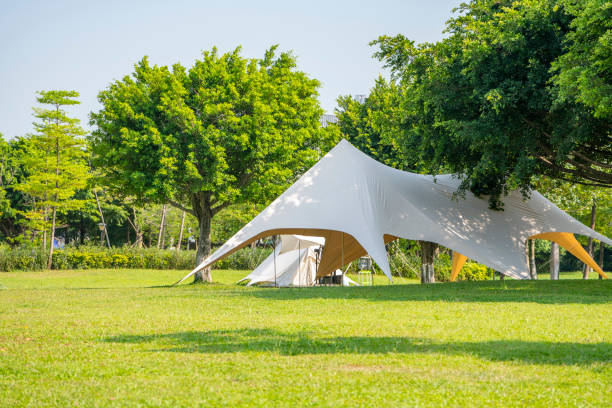
4. How to Choose the Right Exhibition Tent for Your Project
Before requesting quotations, assess your event requirements using these four criteria.
Step 1: Define Your Exhibition Goal
If your priority is to create a recognizable branded destination, a star tent may be the better fit. Its unusual canopy can help differentiate your booth in a large outdoor event space.
If your priority is product demonstrations, lead collection, sales transactions, or staff operations, a pop-up tent may offer a more convenient layout.
Step 2: Calculate the Usable Display Area
Do not compare tents using footprint dimensions alone. The outer canopy size may differ from the practical space available for people, furniture, and displays.
For a star tent, check the location of support poles, sloping canopy sections, and the recommended usable zone. For a pop-up tent, verify the internal dimensions and any obstructions created by the frame.
Before ordering, prepare a simple booth plan showing counters, tables, product displays, staff positions, and visitor circulation.
Step 3: Check the Venue Surface and Weather Conditions
Ground conditions affect how the tent can be secured.
- Grass or suitable soil: Ground stakes may be an option when permitted and appropriate for the site.
- Concrete or paving: An approved ballast or anchoring system may be required.
- Decking or temporary flooring: Confirm the permitted attachment methods and allowable loads with the venue.
- Wind-exposed locations: Check the manufacturer’s wind guidance, site restrictions, and requirements for additional securing or dismantling.
Never assume that a particular ballast weight is sufficient for every tent. Safe anchoring depends on tent geometry, exposed canopy area, wind conditions, ground characteristics, and the manufacturer’s specifications.
Step 4: Evaluate Setup Time and Available Staff
If your team must install multiple booths within a short window, a pop-up folding tent may reduce assembly demands.
For a star tent, confirm the required number of installers, assembly sequence, component weight, and total setup time using the specific model. Include branding panels, ballast, and other accessories when estimating labor.
5. Frequently Asked Questions About Star Tents and Pop-Up Tents
Q1: Does a star tent provide less usable space than a pop-up tent?
It can, depending on the tent design. Sloping canopy sections, support poles, and the shape of the covered area may reduce the practical space available for displays and furniture.
A pop-up tent generally offers a more predictable rectangular layout. To compare models fairly, ask suppliers for the internal dimensions, support locations, and recommended usable display area rather than relying only on the advertised footprint.
Q2: Can a star tent be installed on concrete or other hard surfaces?
Yes, if the specific model supports the installation method and an appropriate anchoring or ballast system is used.
Ground stakes are generally unsuitable for concrete and many paved surfaces. Approved ballast, weights, or engineered anchoring systems may be required. Follow the manufacturer’s instructions and the venue’s safety requirements, particularly in windy conditions.
Q3: How many people are needed to set up a star tent?
The number of installers and total setup time depend on the tent size, pole configuration, frame design, anchoring method, and accessories.
Some models require multiple people and more assembly than a standard pop-up tent. Request model-specific installation instructions and conduct a practice setup before the event.
Q4: Are pop-up tents suitable for professional exhibitions?
Yes. Pop-up tents are commonly used for outdoor exhibitions, trade shows, product demonstrations, sampling campaigns, and promotional booths.
Custom-printed canopies, branded sidewalls, counters, and coordinated display accessories can improve brand presentation while retaining the practical advantages of a folding structure.
Q5: Which tent is better for custom branding?
Both options can support custom printing, but the design opportunities differ.
Star tents offer a distinctive canopy silhouette and can create a prominent branded landmark. Pop-up tents provide conventional canopy panels and a rectangular booth layout that can work well for logos, product graphics, and promotional messages.
The best choice depends on artwork placement, viewing distance, event layout, and the brand experience you want to create.
6. Custom Star Tents and Pop-Up Folding Tents for B2B Events
For businesses sourcing exhibition tents in bulk, the decision involves more than canopy shape. Material specifications, frame construction, printing quality, packed dimensions, installation requirements, and anchoring accessories should all be reviewed before production.
Custom options may include:
- Canopy sizes and configurations suited to the event layout
- Full-color logo and promotional printing
- Frame and fabric specifications based on the intended application
- Optional sidewalls and compatible display accessories
- Packaging and transport arrangements for repeated event use
A reliable supplier should provide product specifications, installation guidance, artwork requirements, and a quotation based on the actual project needs.
خاتمة: Choose an Exhibition Tent Based on Your Priorities
When comparing a star tent vs. a pop-up tent, focus on the job the structure needs to perform.
Choose a star tent when visual recognition, distinctive branding, and creating a focal point are your main priorities. Choose a pop-up folding tent when fast setup, rectangular display space, and practical booth operations matter most.
Before placing an order, confirm the usable interior area, venue surface, anchoring method, staffing requirements, printing specifications, and weather-related restrictions.
For custom exhibition tent projects, share your event location, booth dimensions, branding requirements, and estimated order quantity with a supplier to identify a suitable configuration and request a tailored quotation.