


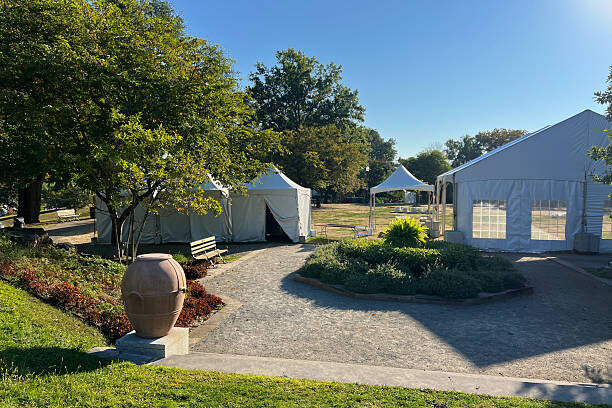
As autumn approaches, event organizers often face changing weather conditions. Heavy fog, high humidity, frequent rainfall, and sharp day-to-night temperature changes can create serious storage challenges.
For commercial event rental companies, منظمي المهرجان, and resort operators, these conditions can increase the risk of fabric mildew, moisture retention, surface staining, and coating degradation.
لذلك, a common question among commercial inventory managers is:
How can you prevent mold growth and fabric damage on commercial party tents after outdoor events in wet autumn weather?
To answer this question, businesses need to consider both tent fabric selection and post-event maintenance. In particular, understanding the differences between cotton canvas and heavy-duty PVC fabric can help operators establish a more effective cleaning, drying, and storage routine.
1. Material Vulnerabilities: Cotton Canvas vs. Heavy-Duty PVC Fabric
Different tent materials respond differently to moisture. لذلك, choosing the right fabric is an important part of long-term commercial party tent maintenance.
| Material | Material Structure | Moisture Behavior | Mold Risk | Maintenance Requirement |
|---|---|---|---|---|
| Cotton Canvas | Natural cellulose fibers | Can retain moisture inside yarns | Higher when stored damp | Requires thorough drying |
| PVC-Coated Polyester | Synthetic polymer-coated fabric | Low water absorption on coated surface | Lower with proper cleaning | Easier cleaning and drying |
نتيجة ل, PVC-coated polyester is often more suitable for commercial rental fleets that experience frequent outdoor use and changing weather conditions.
1. Cotton Canvas and Cellulose Degradation
Cotton canvas is primarily made from cellulose fibers. When the material is packed while still damp, moisture can remain inside the fabric structure.
Under warm and humid storage conditions, this retained moisture can encourage mold and mildew growth. Over time, operators may notice black spots, unpleasant odors, fiber deterioration, and reduced fabric strength.
لذلك, cotton canvas requires careful drying before long-term storage, especially after rainy autumn events.
2. High-Performance PVC Fabric Resilience
By comparison, structural PVC-coated polyester fabric has a synthetic and relatively non-porous surface.
Mold does not feed directly on the PVC polymer coating. لكن, dirt, leaves, organic debris, and other contaminants can remain on the surface.
If operators fold the fabric while it is wet and dirty, trapped organic material can support mold growth. بالتالي, even PVC party tents still require proper cleaning and complete drying after outdoor events.

2. Essential Autumn Cleaning and Drying Steps
For commercial rental companies, post-event maintenance should follow a consistent workflow.
A simple process can help prevent moisture-related damage:
Dismantle → Clean → Dry → Inspect → Fold → Store
This routine reduces the chance of mold growth and helps preserve the performance of commercial tent fabric.
Step 1: Remove Surface Dirt and Leaves
First, remove leaves, soil, grass, and other organic debris from the tent surface.
Then, clean the PVC fabric with clean water, a soft brush, and a mild neutral detergent. A detergent with a pH of approximately 6–8 can be used for routine cleaning.
Meanwhile, avoid abrasive pads and aggressive solvents. These products can damage the outer coating and potentially reduce stain resistance or UV protection.
لذلك, gentle cleaning is preferable to aggressive chemical treatment.
Step 2: Allow Complete Moisture Evaporation
More importantly, never pack a PVC party tent while it is wet.
After cleaning, hang or elevate the fabric in an area with continuous airflow. Pay particular attention to:
- Seams
- Reinforced corners
- Keder strips
- Folded edges
- Connection pockets
- Areas where water can collect
The entire fabric should be completely dry before folding.
Otherwise, moisture trapped between folded PVC layers can contribute to condensation, surface sticking, and difficult-to-remove stains when the tent is deployed again.
Step 3: Use Proper Storage and Temperature Control
Once the fabric is completely dry, store it in a clean and well-ventilated location.
Whenever possible, place folded PVC tarpaulins on elevated pallet racks. Keeping fabric away from direct floor contact helps reduce exposure to ground moisture.
In colder climates, operators should also avoid tightly folding PVC fabric at freezing temperatures. Extremely cold material can become less flexible and may be more vulnerable to cracking along sharp crease points.
لذلك, allowing the fabric to reach a suitable handling temperature before folding can help reduce unnecessary mechanical stress.
3. Heavy-Duty PVC Fabric and Commercial Tent Service Life
In addition to proper maintenance, fabric quality directly affects the long-term operating cost of a commercial tent fleet.
High-quality architectural PVC fabrics can provide better resistance to outdoor exposure, dirt accumulation, and repeated cleaning.
على سبيل المثال, Upal uses 620g/m² heavy-duty PVC fabric for selected commercial tent applications.
| Operating Environment | Upal 620g/m² Heavy-Duty PVC | Expected Service Life |
|---|---|---|
| Coastal / High-Humidity Areas | Heavy-duty PVC fabric | تقريبًا 30–36 months |
| Salt-Air / Ocean Mist Exposure | Heavy-duty PVC fabric | تقريبًا 30–36 months |
| Standard Inland Commercial Use | Heavy-duty PVC fabric | 36+ months with proper maintenance |
لكن, actual service life depends on factors such as UV exposure, wind conditions, cleaning frequency, installation practices, storage conditions, and overall maintenance.
Why Heavy-Duty PVC Can Reduce Maintenance Work
The smooth surface coating of heavy-duty PVC fabric can reduce dirt adhesion.
نتيجة ل, crews can usually remove surface contamination more efficiently after outdoor events. This is particularly useful for rental companies that need to clean and redeploy tents within a short period.
بالإضافة إلى, proper cleaning and drying can help maintain the appearance and functional performance of the tent membrane over repeated rental cycles.
4. How to Build an Effective Commercial Party Tent Maintenance Strategy
For commercial event operators, maintaining tent inventory should be treated as an ongoing operational process rather than a one-time cleaning task.
A practical autumn maintenance strategy includes four key steps:
1. Clean the Fabric Immediately After Events
Remove mud, leaves, dust, and other organic debris before storage.
2. Dry the Tent Completely
Never fold or package fabric until all surfaces, seams, and reinforced areas are completely dry.
3. Inspect Before Folding
Check the fabric for stains, coating damage, tears, loose fittings, and other visible problems.
4. Store in a Dry and Ventilated Area
Use elevated storage racks and avoid prolonged exposure to ground moisture or extreme temperatures.
By following these steps consistently, rental operators can reduce preventable fabric damage and improve inventory utilization.
5. Why Fabric Selection Matters for Commercial Event Rentals
For commercial event rental companies, fabric selection affects much more than appearance.
It can also influence:
- Cleaning time
- Storage requirements
- Maintenance costs
- Reinstallation efficiency
- Service life
- Fleet utilization
- Long-term return on investment
لذلك, businesses should evaluate both the initial fabric specification and its long-term maintenance requirements when purchasing commercial event tents.
Heavy-duty PVC-coated polyester provides a practical option for many outdoor applications because it combines a durable synthetic structure with a smooth, cleanable surface.
ملخص: Protect Your Commercial Party Tents in Autumn
Protecting commercial party tents during damp autumn weather requires a combination of proper material selection and disciplined maintenance.
First, remove dirt and organic debris after every event. Next, wash the fabric with suitable cleaning materials. Then, allow the entire tent to dry completely before folding.
فضلاً عن ذلك, store the fabric in a dry, ventilated, and elevated environment. Operators in colder climates should also avoid folding PVC fabric when it is excessively cold.
Ultimately, these simple procedures can help reduce mold growth, moisture damage, surface degradation, and unnecessary replacement costs.
For rental companies, maintaining clean and durable tent inventory can also improve deployment efficiency and protect long-term fleet profitability.